Intelligent Medical Waste Transfer Loading & Unloading Solution: Setting a New Benchmark for Operating Room Safety and Efficiency
Overview
Against the dual pressures of increasingly stringent medical control standards and continuous labor cost hikes, Fuwei Intelligent builds an intelligent waste and instrument transfer system for operating rooms based on composite robots (AMR + collaborative robotic arms + AI vision). Featuring instant cleaning, full-process sealing and traceable data, the system keeps pollutants under control every second from generation to disposal, completely freeing medical staff from high-risk and repetitive labor.

Pain Point 1: Uncontrollable Infection Risks from Human Factors
In operating rooms, movement, communication and instrument handover of medical staff disturb airflow, acting as an invisible driver for the spread of particles and pathogens. Under traditional workflows, contaminated instruments and dressings rely on manual collection, and every link may become a breakthrough point for cross-infection.
Pain Point 2: “Human Memory Dependence” in Sterile Item Management
Storage, inventory checking and handover of high-value consumables and precision instruments fully depend on manual memory and paper records. A single inventory error may delay surgery or trigger medical disputes. Risks of contact contamination persist all the time.
Pain Point 3: “Timeliness Deficiency” in Medical Waste Disposal
Failure to collect contaminated instruments and dressings in a timely and sealed manner will easily turn them into “time bombs” for nosocomial infection. Under traditional transfer modes, waste is temporarily stored in operating rooms and transported openly, posing high risks of secondary contamination.
Pain Point 4: “Integration Pain” for Automation Upgrade
Fixed mechanical arms have poor flexibility and cannot adapt to variable moving paths in operating rooms. Complex docking with HIS/LIS systems often discourages hospital departments, with renovation cycles lasting months.

1. Precision Perception: AI 3D Vision + Intelligent Gripper — Solving Precision Issues of Unreliable Gripping & Incomplete Clearing
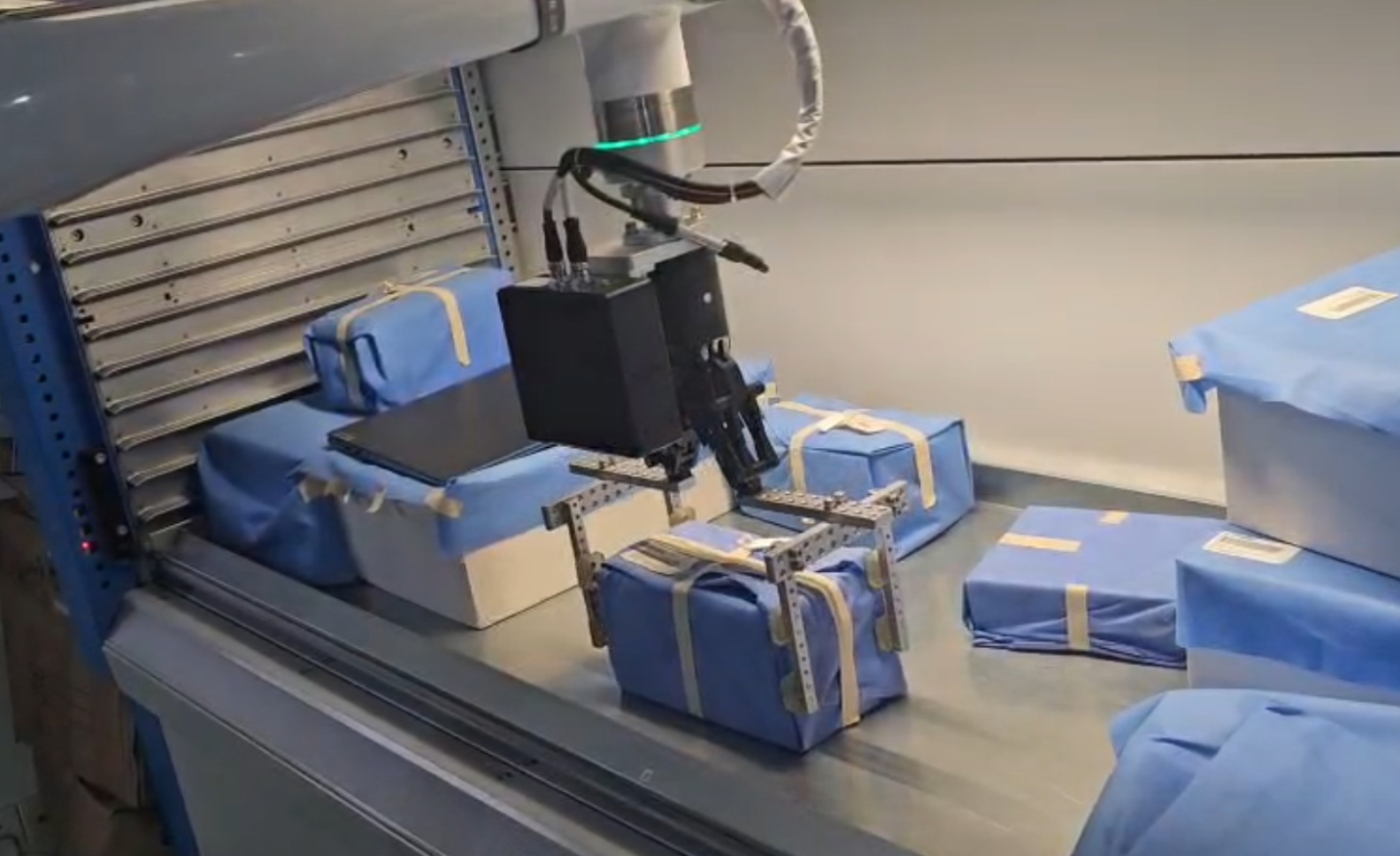
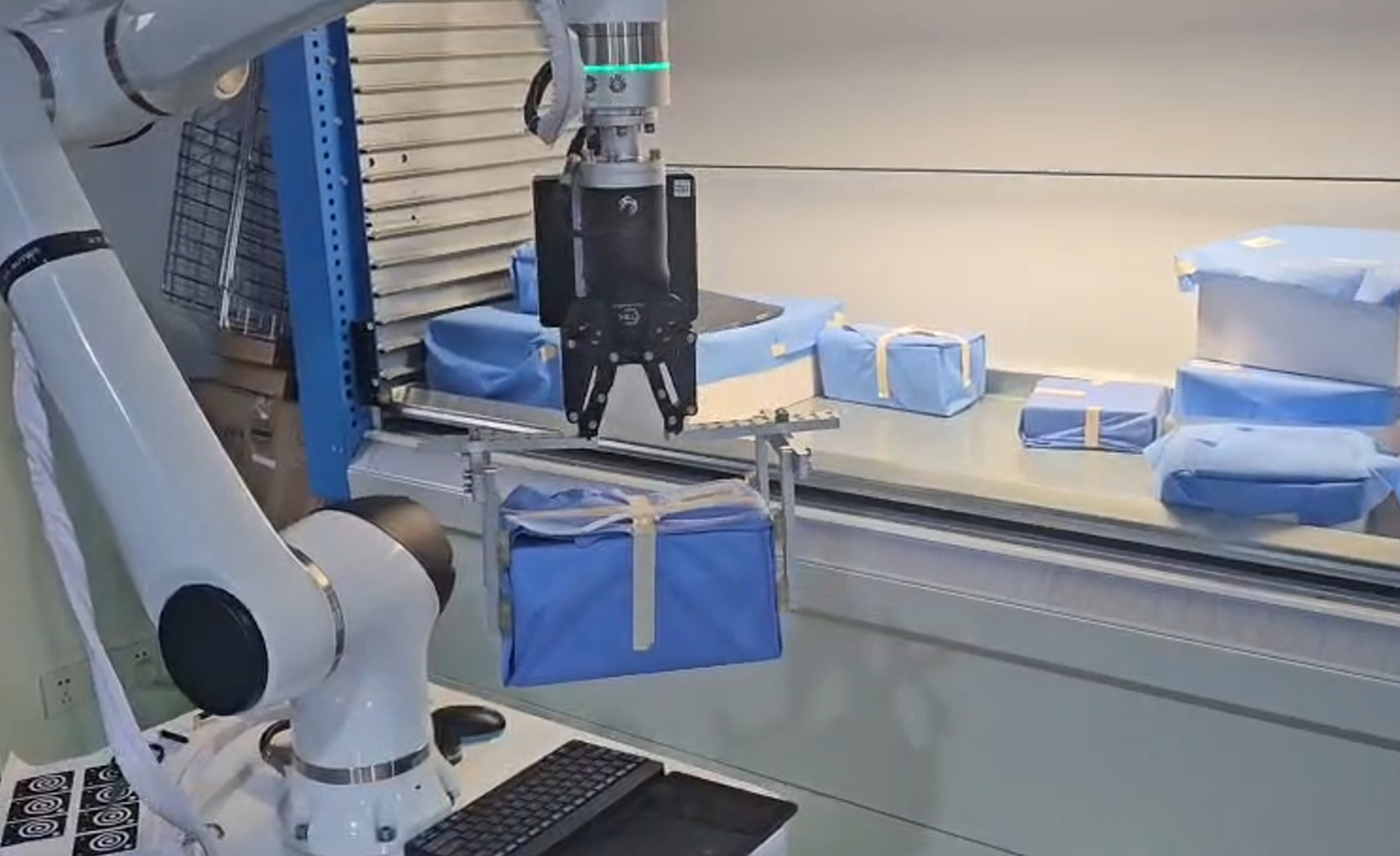
Pain point: Manual inventory is prone to omissions, and instrument counting is time-consuming and error-prone.Solution: Equipped with high-resolution 3D cameras and deep learning algorithms, the robot can identify contaminated instruments and dressing packs of different sizes and materials within milliseconds, realizing precise positioning, adaptive grabbing and classification. Its classification accuracy is over 30% higher than manual work.Value output: The inventory accuracy of surgical instruments rises to 99.9%, eliminating risks of foreign object residue.
2. Flexible Execution: Composite Robot Body — Solving Efficiency Issues of Slow Moving & Transfer
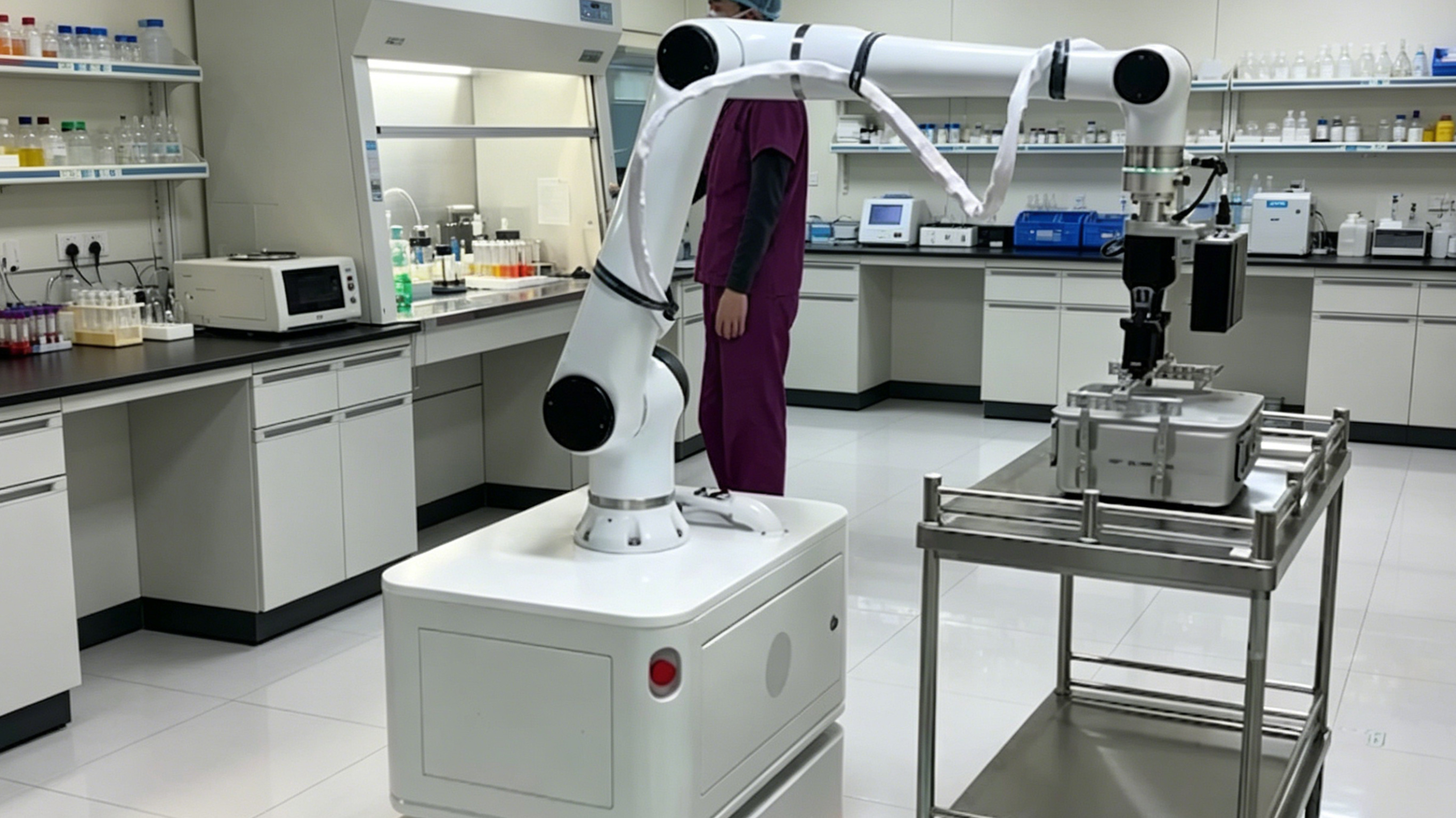
Pain point: Manual transport of contaminated items requires frequent entry and exit of operating rooms, increasing exposure risks for core staff and contamination spread risks.Solution: AMR equipped with collaborative robotic arms autonomously navigates along preset paths, enabling fully automatic sealed transfer from beside operating tables to decontamination zones. The robot can dock seamlessly with elevator systems to operate across floors. One robot can replace 3–4 dedicated transfer staff.Value output: Operating room turnover time shortened by 30%; flow of personnel in core areas reduced by 50%.
3. Intelligent Brain: Integrated AI Scheduling Platform — Solving Management Issues of Poor Coordination & Slow Tracing
Pain point: Traditional workflows lack data for operating room waste management, making source tracing impossible once infection incidents occur.Solution: The platform schedules all robots uniformly, automatically recording the time, location, weight and operator of each transfer, and uploads data to hospital HIS/LIS systems in real time. It automatically generates electronic ledgers and supports multi-dimensional query by time period, department and operator, forming digital archives of surgical operations.Value output: Meets JCI and infection control audit requirements; traceability response time is shortened from days to minutes.
Relevant Case